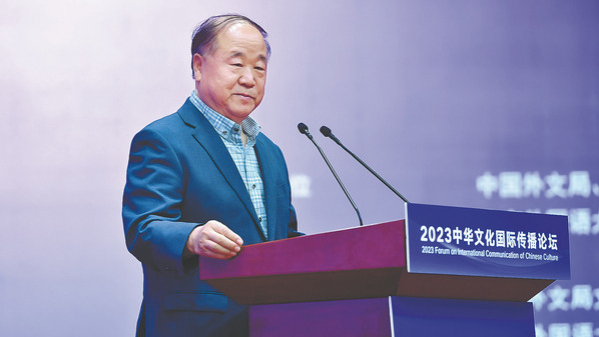
Mo Yan
Introduction
Mo Yan, born as Guan Moye in 1955 in the Shandong province of China, is an acclaimed Chinese author who won the Nobel Prize in Literature in 2012. His pen name, Mo Yan, means "don't speak" in Chinese, a reminder of the caution he learned during his youth. Mo Yan emerged as a significant figure in Chinese literature, known for his unique narrative style that blends hallucinatory realism with folk tales, history, and the contemporary life of rural China.
Early Life and Influences
Mo Yan grew up in the rural village of Gaomi, in Shandong province, which later became the backdrop for many of his literary works. The son of farmers, Mo Yan left school during the "cultural revolution" (1966-76) and worked as a farmer and a laborer in a factory before joining the People's Liberation Army at the age of 20. It was during his military service that Mo Yan began to write. His experiences and the rural life in Shandong have heavily influenced his work, providing rich material for his storytelling.
Literary Career and Style
Mo Yan's literary debut came in 1981 with the publication of his story Drizzling Rain on a Spring Night. He quickly gained prominence for his bold narrative style, which often incorporates elements of magical realism and is characterized by vivid descriptions and a deep sense of the surreal. His breakthrough came with the novel Red Sorghum (1986), a family saga set in the turbulent 1920s and 1930s in China. This work was adapted into an internationally acclaimed film by director Zhang Yimou, bringing Mo Yan's work to a global audience.
His writing is known for its inventive storytelling and use of local dialects, which reflect the realities of rural Chinese life while intertwining fantastical elements. Mo Yan has cited influences from both Chinese folk tradition and Western literature, including Latin American magic realism and authors such as Gabriel Garcia Marquez.
Major Works
Mo Yan's bibliography includes a diverse range of novels, short stories, and essays. Notable novels include Big Breasts and Wide Hips, Life and Death Are Wearing Me Out, and Frog. These works often explore themes of social injustice, cultural identity, and the complexities of rural life.
-
Red Sorghum: This novel is a tale of the sorghum wine-making family in Shandong, blending history with folklore and myth.
-
Big Breasts and Wide Hips: A sprawling epic that examines China's turbulent 20th century through the life of a woman and her family.
-
Life and Death Are Wearing Me Out: An exploration of China's transformation in the 20th century, told through the reincarnated souls of a protagonist.
-
Frog: Focuses on China's one-child policy and its impact on individual lives and society as a whole.
Nobel Prize and Global Recognition
In 2012, Mo Yan was awarded the Nobel Prize in Literature for his writing that "with hallucinatory realism merges folk tales, history, and the contemporary." His win sparked both celebration and controversy, with discussions about the nature of his work and its commentary on Chinese society and governance. Despite the varied opinions, Mo Yan's Nobel win cemented his status as a leading voice in world literature.
Recent Works and Activities
Following his Nobel win, Mo Yan released A Late Bloomer, a collection of novellas and short stories set in his signature Gaomi village. This work reflects modern societal changes and engages with contemporary issues such as the influence of the internet and social media in rural China. Mo Yan continues to explore the human condition through his writing, maintaining the blend of the real and the surreal that has become his hallmark.
Mo Yan also remains an active participant in literary dialogues and cultural exchanges globally. His works have been translated into multiple languages, making his stories accessible to a worldwide audience and providing a window into the rich cultural tapestry of China.
Cultural Impact and Legacy
Mo Yan's work has had a significant impact on both Chinese and global literature. By merging contemporary issues with traditional Chinese storytelling, he has created a unique narrative voice that resonates with readers across the world. His exploration of rural life, combined with his innovative narrative techniques, offers a profound commentary on the social and political landscape of China.
Mo Yan's influence extends beyond literature; his works have inspired adaptations in film and theater, contributing to a broader cultural dialogue. His ability to weave intricate stories that reflect the complexities of human nature ensures that his literary legacy will endure for future generations.








